
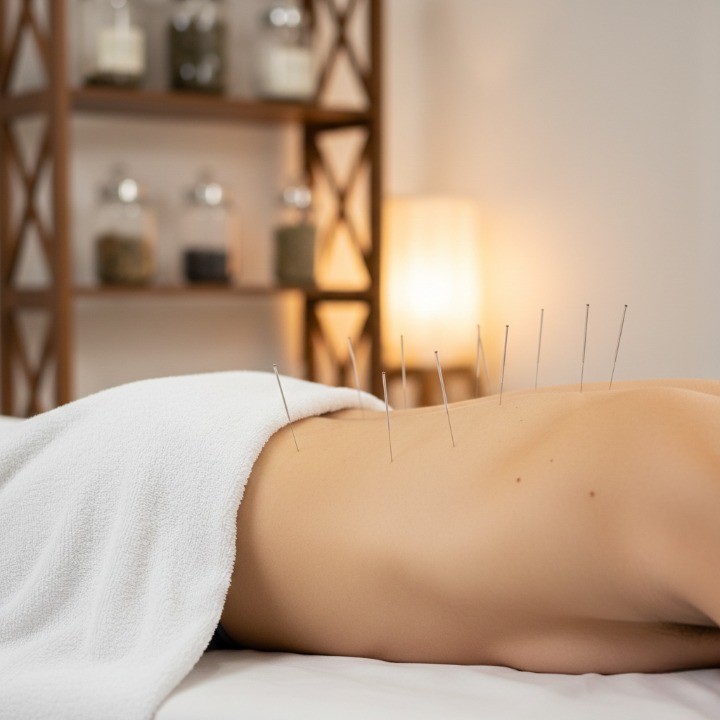
Lower back pain is the leading cause of disability worldwide, and in our East Melbourne clinic, it is the most common reason patients walk through our doors. Whether it’s a sharp, electric shock down the leg (sciatica) or a dull, constant throb after sitting at a desk, lower back pain is rarely “just a sore muscle.”
At Acuvia, we look at the lower back as a complex suspension system. When one part of that system—the discs, the nerves, or the deep stabilizing muscles—fails, the entire structure compensates. Our goal is to stop the compensation and restore true function.
The Sciatica Loop: Why the Pain Travels
Sciatica isn’t a diagnosis; it’s a symptom. It occurs when the Sciatic Nerve—the longest nerve in your body—is compressed or irritated. This typically happens at the L4, L5, or S1 vertebrae.
Standard painkillers often fail because they don’t address the mechanical pressure. Acupuncture, however, works by inducing vasodilation—expanding blood vessels around the nerve to flush out inflammatory chemicals like cytokines that keep the nerve “angry.”
The “Protective Guarding” Trap
When you injure your back, your brain sends a signal to the surrounding muscles to “clamp down” to protect the spine. This is called protective guarding. While helpful in the first 48 hours, this tightness often persists long after the initial injury has healed.
This creates a cycle of chronic tension: the muscles become ischemic (starved of oxygen), which leads to more pain, which leads to more guarding. Acupuncture needles act as a circuit breaker for this loop, forcing the deep paraspinal muscles to relax and allowing the spine to move naturally again.
How We Treat Back Pain at Acuvia
Our East Melbourne specialists utilize a multi-layered approach to back pain:
1. Segmental Acupuncture
We target the specific nerve levels in the lower back that correspond to your pain pattern. This helps “reboot” the communication between the spinal cord and the affected muscles.
2. Trigger Point Release
We address the “shadow pain”—the knots in the glutes, hips, and QL (Quadratus Lumborum) muscles that often refer pain into the lower back.
3. Distal Needling for Acute Pain
In cases where the back is too inflamed to touch, we use distal points on the hands or lower legs. These points stimulate the brain’s Descending Inhibitory Pain Pathway, providing rapid relief without aggravating the local injury.
Moving Forward: Life After Back Pain
Healing a back injury isn’t just about the time on the table. We work with our Melbourne patients on:
- Load Management: Learning how to sit and move without overloading the lumbar discs.
- Core Reactivation: Simple exercises to ensure the deep stabilizers (Multifidus and Transverse Abdominis) are supporting the spine.
- Anti-inflammatory Habits: Supporting the body’s repair through hydration and proper nutrition.
Don’t Let Back Pain Dictate Your Life
Whether it’s a recent “tweak” or a decade of discomfort, our clinical acupuncture protocols offer a path back to movement. Located conveniently in East Melbourne.