
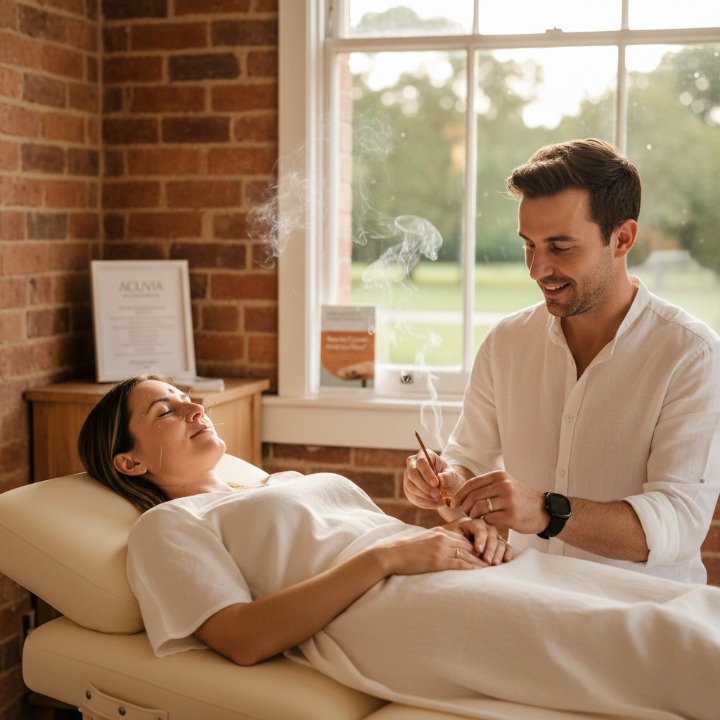
As January transitions into February 2026, the local climate in the inner-Melbourne suburbs shifts. While many associate “hay fever season” exclusively with the spring months of October and November, Melbourne’s unique botanical landscape—particularly around the established gardens of East Melbourne and Richmond—often triggers a secondary, more stubborn wave of allergic rhinitis during the height of summer.
At Acuvia, located at 12 Wellington Parade, we assist patients who find that conventional antihistamines and nasal sprays are either losing their efficacy or causing undesirable side effects like drowsiness and fatigue. Our clinical approach to acupuncture offers a registered, evidence-based alternative to managing the inflammation and immune hyperactivity that characterize seasonal allergies.
The “Second Wave”: Melbourne’s Late-Summer Allergy Triggers
In February, the lush greenery of the Fitzroy Gardens and Treasury Gardens begins to dry under the Victorian sun. This process releases a different profile of airborne irritants compared to the spring grasses. Dust, mold spores from dried vegetation, and late-flowering weeds become the primary culprits for the itchy eyes and congested sinuses reported by residents in the 3002 and 3121 postcodes.
For those commuting into the Melbourne CBD or working in the corporate hubs along Wellington Parade, the urban heat island effect can exacerbate these symptoms, trapping allergens at street level. This is why many locals find their hay fever reaching a peak just as they return to a full work schedule in the new year.
A Clinical Perspective on Acupuncture for Rhinitis
To understand why acupuncture is a recommended option for hay fever, one must look at the physiological mechanisms of the allergic response. Allergic rhinitis is fundamentally an overreaction of the immune system. When the body perceives pollen or dust as a threat, it triggers a cascade of inflammatory chemicals, including histamine and Immunoglobulin E (IgE).
Acupuncture and the Nervous System
Beyond immune regulation, acupuncture has a profound effect on the autonomic nervous system. The persistent “dripping” of a runny nose and the swelling of nasal passages are controlled by the parasympathetic and sympathetic branches of our nervous system. Clinical acupuncture treatments at our East Melbourne clinic are designed to restore balance to these systems, providing relief from the physical symptoms while also addressing the “brain fog” and irritability that often accompany chronic allergies.
The Acuvia Treatment Protocol: What to Expect
Choosing clinical care means your treatment is tailored to your specific presentation. Not all hay fever is the same; some patients present with predominantly “wet” symptoms (runny nose and sneezing), while others suffer from “dry” symptoms (itching, redness, and blockage).
- Initial Assessment: We begin by reviewing your history of allergies and current medications. As an AHPRA-registered clinic, we ensure our care complements any existing treatments prescribed by your GP or allergist.
- Targeted Point Selection: We utilize clinical points such as LI20 (Yingxiang) beside the nostrils and Yintang between the eyebrows to provide immediate relief for sinus pressure. Distal points on the hands and legs are used to strengthen the body’s overall “defensive” response.
- Maintenance and Prevention: For long-term sufferers in suburbs like Collingwood and Abbotsford, we recommend a series of sessions to build resilience before the peak pollen days hit.
Why AHPRA Registration and HICAPS Matter
When seeking acupuncture in Melbourne, it is vital to ensure your practitioner is registered with the Chinese Medicine Board of Australia (CMBA) under the AHPRA umbrella. This guarantees a standard of hygiene, education, and professional ethics.
Furthermore, our clinical status allows for **instant HICAPS rebates**. Most private health funds, including Medibank, Bupa, and HCF, provide “Extras” cover for acupuncture. By claiming on the spot at 12 Wellington Parade, you only pay the gap, making clinical allergy management a sustainable part of your healthcare routine.
Traditional Wisdom Meets Modern Melbourne
In Traditional Chinese Medicine (TCM), hay fever is often viewed as a weakness in the “Wei Qi”—the body’s protective barrier. In a modern context, we view this as a compromised immune barrier in the nasal mucosa. By combining ancient techniques with modern clinical understanding, we help our patients in Fitzroy and the inner-east rebuild this barrier, reducing their reliance on daily medication.
Self-Care Tips for February Allergy Sufferers
- Monitor Pollen Counts: Use the Melbourne Pollen Forecast app and plan your outdoor exercise for lower-count days.
- Hydration and Diet: TCM suggests avoiding excessive dairy during allergy peaks, as it can contribute to “dampness” and increased mucus production.
- Sinus Rinsing: Complement your acupuncture sessions with saline rinses to physically remove allergens from the nasal passages.
Ready to Clear the Air?
Experience clinical acupuncture at our central East Melbourne location. Let us help you navigate the late-summer allergy wave with professional, registered care.
Local Service Area:
East Melbourne 3002
Richmond 3121
Collingwood 3066
Abbotsford 3067
Fitzroy 3065
Melbourne CBD 3000