
It is 11:30 PM. You have had a grueling day at your East Melbourne office. Your body is physically exhausted—your eyes are heavy, and your muscles ache. Yet, the moment your head hits the pillow, your brain sparks to life. Your heart rate feels slightly elevated, and your thoughts are racing through tomorrow’s “to-do” list.
In clinical terms, this is known as Hyperarousal. It is the hallmark of the “tired but wired” state, and it is the primary reason why many professionals in the Melbourne CBD struggle with chronic insomnia.
The Science of Hyperarousal: Cortisol vs. Melatonin
Naturally, your body follows a Circadian Rhythm. In the morning, cortisol rises to wake you up. In the evening, cortisol should drop, allowing melatonin to rise and initiate sleep. However, chronic stress “breaks” this feedback loop.
When you are constantly in a high-pressure environment, your HPA (Hypothalamic-Pituitary-Adrenal) axis stays active. This results in “nocturnal cortisol spikes.” Even though you are exhausted, your brain believes it is under threat, keeping you in a state of sensory alertness that prevents you from entering deep, restorative REM sleep.
How Acuvia Resets Your Sleep Cycle
At Acuvia Acupuncture Clinic, we don’t just treat “tiredness.” We treat the underlying autonomic dysregulation. Our clinical approach to sleep involves three distinct phases:
1. Down-Regulating the Sympathetic Nervous System
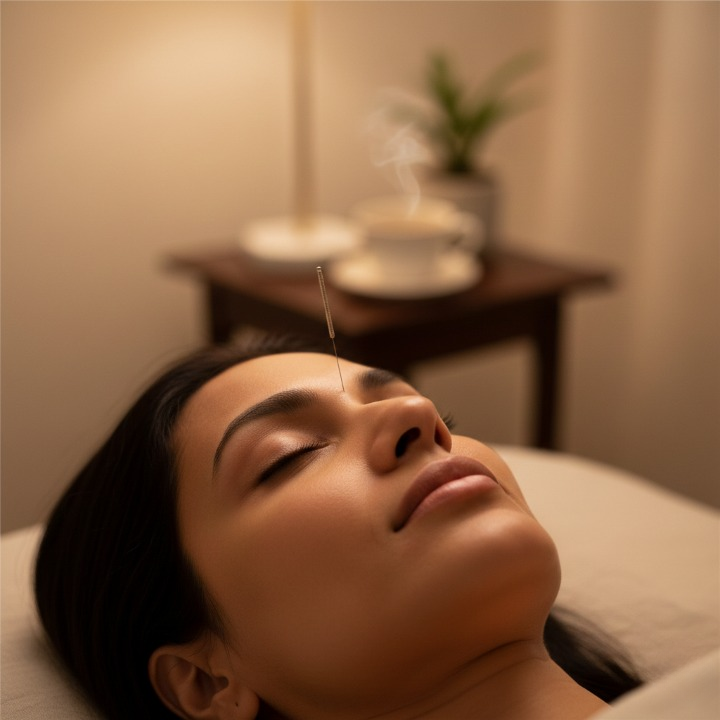
By targeting points such as Anmian (a specialized point behind the ear) and Yintang (between the eyebrows), we signal the brain to shift from “Fight or Flight” to “Rest and Digest.” This shift is often felt during the session as a heavy, profound sense of relaxation.
2. Regulating the Heart Rate Variability (HRV)
Insomnia is often accompanied by a “tight” chest or a rapid heart rate. We use distal points on the wrists and ankles that have a verified effect on the vagus nerve, helping to lower the resting heart rate and prepare the cardiovascular system for sleep.
3. Addressing “Sleep Architecture”
It’s not just about falling asleep; it’s about staying asleep. We use specific acupuncture protocols designed to enhance Slow Wave Sleep (SWS), the stage of sleep where the brain flushes out toxins and restores cognitive function.
| Sleep Issue | Physiological Cause | Acupuncture Focus |
|---|---|---|
| Can’t Fall Asleep | High Sleep Latency / Hyperarousal | Calming Yintang & Heart 7 |
| 3 AM Wakeups | Liver-Glycogen/Cortisol Spikes | Regulating HPA-Axis |
| Restless Sleep | Lack of Deep Slow-Wave Sleep | Enhancing Vagal Tone |
Beyond the Needle: Sleep Hygiene for the Melbourne Professional
While acupuncture is a powerful tool for resetting the nervous system, we also work with our East Melbourne patients on clinical sleep hygiene. This includes:
- Digital Sunset: Eliminating blue light 60 minutes before bed to allow natural melatonin synthesis.
- Temperature Regulation: Keeping the bedroom at the optimal 18°C.
- Magnesium Support: We often recommend specific magnesium chelates that work synergistically with acupuncture to relax the nervous system.
Is Acupuncture a Permanent Fix for Insomnia?
Acupuncture is not a sedative; it is a neuromodulator. This means it trains your brain to return to its natural rhythm. Most of our patients find that after a course of 4 to 6 treatments, their body “remembers” how to fall asleep naturally without the need for external aids or supplements.
Stop Tossing and Turning
If you are tired of being “wired,” let us help you find your biological “off-switch.” Located in the heart of East Melbourne, Acuvia is your sanctuary for clinical sleep recovery.